
It includes foundations, excavations, retaining structures, ground improvement and stability measures. Ground conditions, groundwater and construction methods influence both the safety and cost of building and infrastructure projects.
In Norway, geotechnical construction is particularly important in areas with soft clay, marine deposits, variable bedrock levels or challenging terrain.
What is geotechnical construction?
Geotechnical construction refers to the practical application of geotechnical engineering during building and infrastructure projects. It connects the design of foundations and earth-retaining structures with the actual construction work performed on site.
The purpose is to ensure that the ground can support the planned structures and that construction activities do not cause unacceptable instability, settlement or damage to neighbouring properties.
Typical projects include residential buildings, commercial developments, roads, bridges, retaining walls and underground infrastructure.
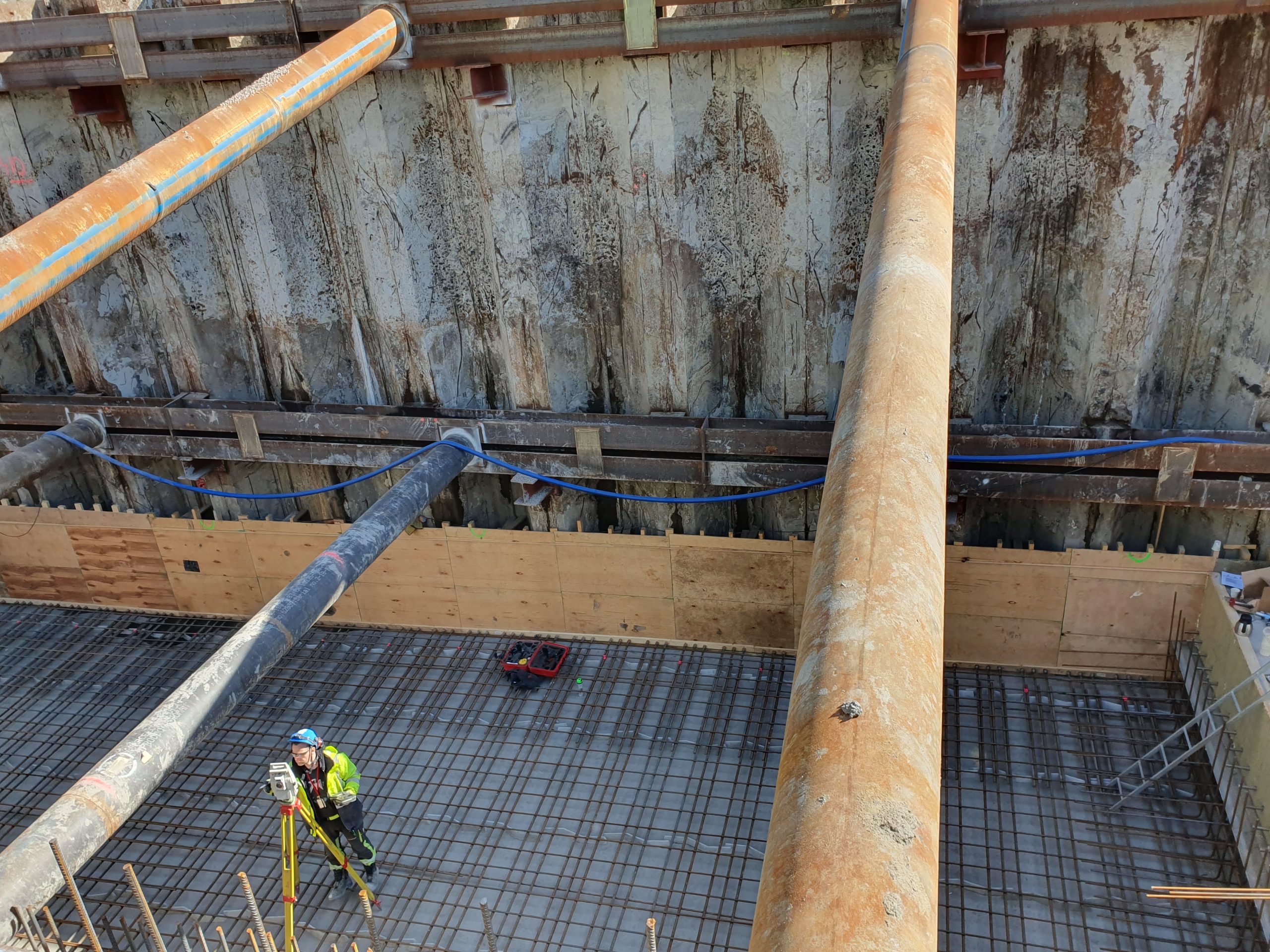
Photo above: Geotechnical construction – Bane NOR project in Oslo in 2020. This photograph from a Bane NOR construction project in Oslo, around 2020, illustrates geotechnical construction in practice. The excavation includes temporary structural support and reinforcement works, highlighting the importance of maintaining stability throughout the construction phase. In complex urban projects, geotechnical design must account not only for the completed structure but also for excavation sequences, temporary support systems and site conditions. Close coordination between geotechnical engineers and contractors is essential for safe execution.
Geotechnical and foundation engineering
Foundations are among the most important elements of geotechnical construction. The appropriate solution depends on the ground’s bearing capacity, deformation characteristics, groundwater conditions and applied structural loads.
Common geotechnical construction activities include:
- Foundation engineering: Shallow foundations, piled foundations and other load-transfer solutions.
- Excavation works: Temporary slopes, deep excavations and construction pits.
- Retaining structures: Sheet piling, retaining walls and earth-support systems.
- Ground improvement: Measures to increase bearing capacity, reduce settlement or improve stability.
- Earthworks: Construction of embankments, slopes and engineered fills.
Geotechnical foundation design must account for both ultimate limit states and serviceability requirements, including expected settlements.
For Norwegian projects, the choice of foundation design and ground conditions should be assessed before the construction method is finalised.
Ground investigation before construction
A geotechnical site investigation provides information about the ground conditions that will affect design and construction.
Depending on the project, investigations may include drilling, soil sampling, laboratory testing, groundwater measurements and evaluation of bedrock depth.
The results help engineers assess bearing capacity, settlement potential, slope stability and suitable construction methods.
For some projects, existing information may be sufficient for an initial assessment. More demanding works may require additional geotechnical ground investigations.
Insufficient knowledge of the ground can lead to unexpected construction difficulties, changes in foundation design and additional costs.
Excavations, retaining structures and construction methods
Geotechnical construction is not limited to the completed building. Temporary construction stages can introduce significant risks, particularly where excavations affect existing foundations, groundwater or adjacent slopes.
A deep excavation may require structural support, groundwater control and an assessment of ground movements.
The design of excavations and construction pits must consider both the excavation geometry and the surrounding ground conditions.
Where space is limited or neighbouring structures are sensitive, sheet piling and retaining structures may be necessary.
Construction sequencing is also important. A solution that is stable in its final configuration may require additional temporary support during excavation or installation.
Geotechnical design and contractors
Geotechnical construction requires coordination between the geotechnical engineer, structural designer and construction contractor.
The geotechnical engineer evaluates the ground conditions, establishes design assumptions and develops technical solutions. The contractor carries out the construction work according to the design and applicable execution requirements.
The term geotechnical contractors typically refers to specialist contractors performing works such as piling, sheet piling, ground improvement and specialised excavation support.
In Norway, geotechnical design and engineering (RIG) may be required to document bearing capacity, stability, settlements and the necessary construction precautions.
Geotekniker AS provides geotechnical engineering assessments and design services, rather than acting as the contractor performing the physical groundworks.
Geotechnical monitoring and construction-stage safety
Ground conditions encountered during construction may differ from the assumptions used in design. This makes technical follow-up particularly relevant in projects involving deep excavations, sensitive soils or nearby structures.
Geotechnical monitoring solutions can include measurements of settlement, lateral ground movement, pore water pressure and vibrations.
Monitoring requirements depend on the project’s risks and the potential consequences of unexpected ground movements.
Geotechnical monitoring and measurements can provide information about changes during construction, while geotechnical site supervision can help identify conditions requiring further assessment or design adjustments.
Geotechnical construction requirements in Norway
Geotechnical construction must comply with applicable Norwegian building regulations and relevant technical standards.
Section 10-2 of the Norwegian Building Technical Regulations (TEK17) addresses structural safety, including stability during construction and in the completed structure.
Eurocode 7 (NS-EN 1997), together with the applicable Norwegian National Annexes, provides an important framework for geotechnical design.
The standard covers issues such as bearing capacity, settlement, retaining structures and slope stability. The specific design and execution requirements depend on the project.
Further information is available in the Norwegian guidance on Eurocode 7 and geotechnical design requirements.
For construction in areas where quick clay or other sensitive soils may be present, a separate assessment of area stability and quick clay hazards may also be necessary.
Geotechnical reports and construction documentation
The required geotechnical documentation depends on the complexity of the project, ground conditions and applicable regulatory requirements.
A geotechnical assessment may address ground conditions, bearing capacity, stability, foundation recommendations and construction-related risks.
For more complex works, additional calculations, drawings, execution assumptions and monitoring requirements may be necessary.
Geotekniker AS assists developers, property owners, contractors and engineering professionals with geotechnical assessments and reports for Norwegian construction projects.
Geotechnical construction support in Norway
Geotekniker AS provides geotechnical consulting, engineering assessments and documentation for construction projects throughout Norway.
Our services help clarify ground-related risks, identify suitable technical solutions and establish the geotechnical basis for safe construction.
For an overview of our professional capabilities, see geotechnical services in Norway.
Planning a construction project involving foundations, excavations or challenging ground conditions? Contact Geotekniker AS to discuss the need for geotechnical assessment, design or construction-stage support.
Frequently Asked Questions About Geotechnical Construction
What is geotechnical construction?
Geotechnical construction involves foundations, excavations, retaining structures, ground improvement and other construction activities affected by soil and rock conditions. It combines geotechnical engineering principles with practical construction methods to ensure stability and structural safety.
What is the difference between geotechnical engineering and geotechnical construction?
Geotechnical engineering focuses on investigating ground conditions, analysing soil behaviour and designing safe solutions. Geotechnical construction involves implementing those solutions on site, including foundation works, excavation support and ground improvement.
When is a geotechnical assessment required for construction in Norway?
A geotechnical assessment may be necessary when ground conditions affect foundation design, excavation stability or the safety of neighbouring structures. The need depends on the project, local ground conditions and applicable Norwegian building regulations.
What are the main challenges in geotechnical construction?
Common challenges include soft clay, insufficient bearing capacity, settlement, groundwater, unstable excavations and construction near existing buildings. In Norway, sensitive clay and quick clay may require additional stability assessments.
What is Eurocode 7 in geotechnical construction?
Eurocode 7 (NS-EN 1997) provides a framework for geotechnical design, including foundations, retaining structures and stability assessments. Together with applicable Norwegian National Annexes, it is an important basis for geotechnical design in Norway.
Does Geotekniker AS provide geotechnical construction services?
Geotekniker AS provides geotechnical consulting, assessments, design and technical documentation for construction projects in Norway. We assist developers, property owners and contractors with ground-related engineering challenges. Physical construction work is performed by specialised contractors.

Fagansvarlig geotekniker og daglig leder i Geotekniker AS. Han har M.Sc. i faststoffmekanikk (UiO) med videreutdanning i geoteknikk (NTNU, OsloMet) og hydrologi (NMBU). Han har 20 års ingeniørerfaring, blant annet fra Det Norske Veritas, hvorav de siste 12 årene er innen geoteknikk, blant annet som kommunegeotekniker i Lørenskog kommune og i Bane NOR. Geotekniker AS har sentral godkjenning fra DiBK i tiltaksklasse 3.